

CURLY GURLZ SALON
by Eileen Nittler
The hairdresser’s nails, long and pointed, scraped along my scalp maybe a little harder than necessary, but as a new client, I couldn’t take it personally.
“Do you wax your face?” she asked.
“No.” I was unsure what that even meant, but was very sure I didn’t do it.
“Oh…a natural girl.”
That I am. A natural girl, well, natural woman. I mentioned that my husband didn’t mind my looks so why would I? Then I added, “Even if he did mind it, I probably wouldn’t.”
The next “oh” she made was heavy with judgement, and when she sat me up after the wash, I felt cool water running down my back, the towel missing the back of my head completely.
At the best of times, finding a hairdresser to tackle my tangles isn’t easy. My hair is thick, like a cat, big and wild, hard to tame. In our new town, we easily found a bank, an insurance agent, a dentist, a gym, a coffee shop. But a hairdresser who can wrestle with my head? Those are high stakes. The salon claimed to specialize in thick hair, and I was able to make an appointment with only a few days’ notice. I was excited to form a new friendly/professional relationship. After all, we were on a good streak in town.
I mentioned I was a newcomer, arriving from a more progressive city in a more progressive state. The atmosphere cooled palpably with those words. Conversation lagged.
I understand that when people move to a new place, things can change. I really do. And change is rarely—if ever—comfortable or easy. Even good changes can be bumpy at first. I also know that fear of new people/culture/etc. is a hard-wired cognitive process.
The contempt in her voice held weight. “It’s so important to be respectful of the culture of a new place,” she gestured with her texturing scissors.
“When someone likes what they see, they should certainly vote to keep it that way,” she pushed my head forward to clean up the nape of my neck, sharp slices against my skin.
“So many people are rude and just throw their trash around rather than take care of the environment here.”
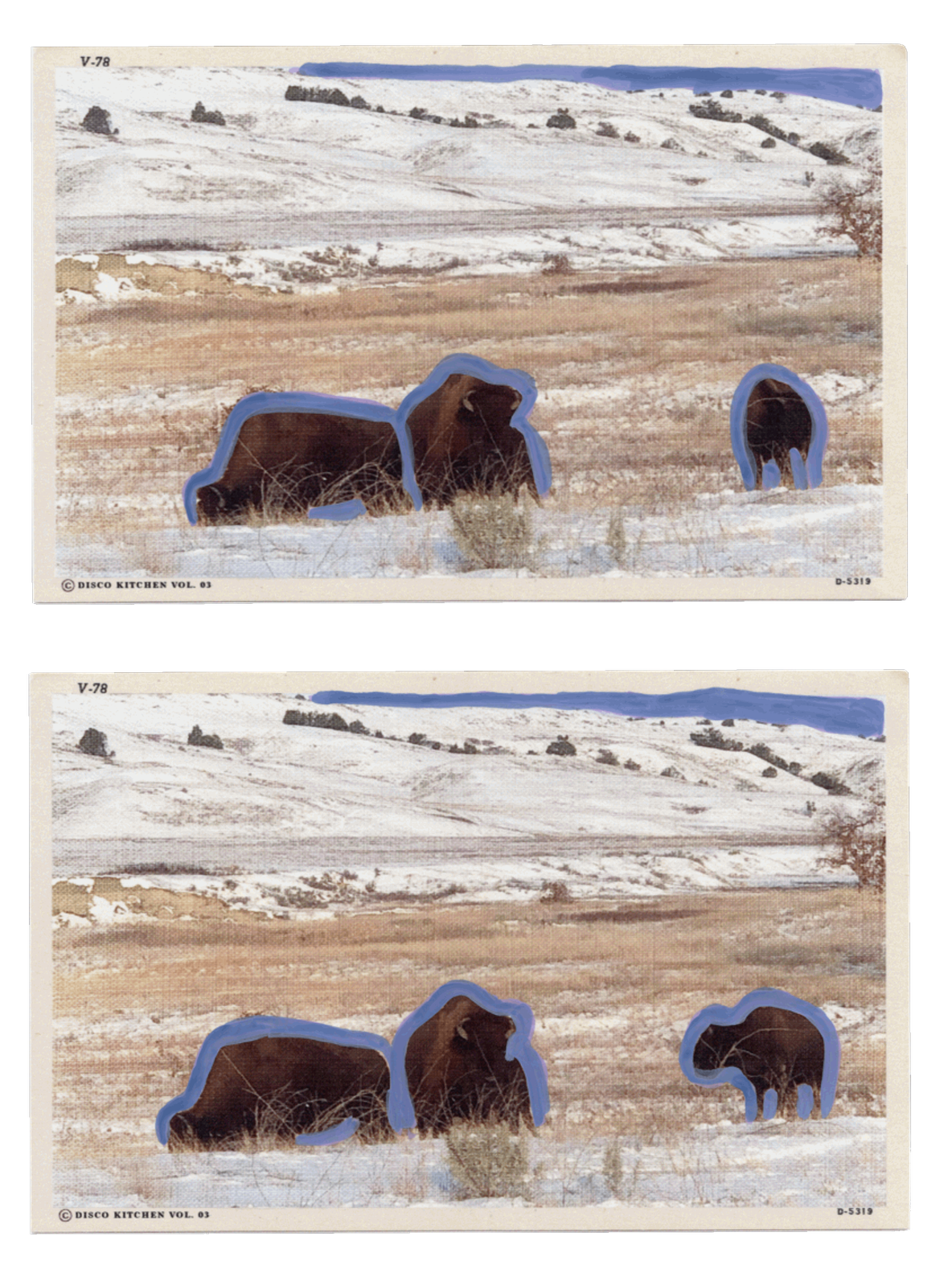
I agreed with her on all those points, and not only because she had weapons in her hands. We joked briefly about how people are foolish around Yellowstone National Park. I mentioned a man who was recently arrested for kicking a bison.
She switched from offense to defense as though I had insulted her family rather than trying to find common ground at someone else’s expense. “Well, he was drunk.”
“I’ve been drunk before, but I’ve never kicked a bison."
“He was black-out drunk. I’m sure you’ve never been black-out drunk.”
I have been, more than once, which is why I am sober now. Not that I am proud of it, but I was a little offended she thought I hadn’t had a problem with alcohol. Still, I didn’t push it.
“Why did you come here?” she asked outright and though I thought I shouldn’t have to justify my choices, I explained my daughter had moved for work and wanted us near. The sound she made was somewhere between hmmmm and ugggghhhh. Without saying it directly, she made it clear that I was unwelcome and unwanted.
I was glad when, with more yanking than was ideal, she finished up scrunching gel into the curls and spun me to view the mirror.
The cut was excellent.
On my walk home, I argued with myself about wanting to win her over, to prove to this woman with bad manners and good skills that I am worthy of her high standards of xenophobia, if only to have someone who understood my hair. I wanted to prove myself to her.
Then again, is her judgment worth it? Should I try to open her mind to the idea that people from places outside the county may be of value?
Then again, it’s just hair, and she wasn’t nice. I didn’t want to enable her attitude either, nor reward with my money.
Then again, it’s within walking distance of home.
Then again, then again, then again.
I voted to be shaggy for as long as it takes to find a new salon. As I now finger my split ends and try to wrangle my hair into a ponytail, I am second-guessing this decision. I mean, it’s not like she kicked a bison or anything, right?
Eileen Nittler is a raconteur, rabble rouser, and former social worker. She lives in Montana and complains endlessly about the cold. Her fiction, non-fiction, and poetry have been published in Oregon Humanities, The Chicago Story Press, Redrosethorns, NUNUM, and Memoir, among others.